The information on this website is general in nature and does not take into account your objectives, financial situation, or needs. Consider seeking personal advice from a licensed adviser before acting on any information.
Secured and unsecured car loans can look similar at first, but the way the loan is backed can affect rates, eligibility, insurance expectations and what may happen if repayments are missed. This guide explains the key differences for Australian borrowers comparing car finance options.
When comparing car finance in Australia, one of the first distinctions you may come across is whether a loan is secured or unsecured. Both can be used to fund a vehicle purchase, but they work differently because of what the lender can rely on if the borrower does not repay the loan as agreed.
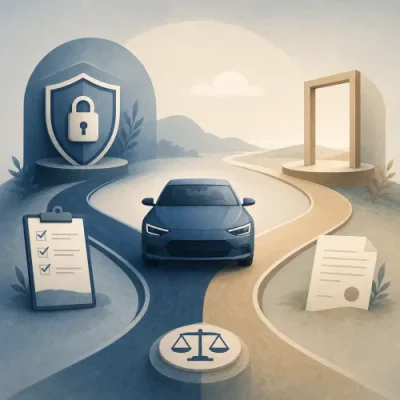
A secured car loan is usually tied to the vehicle being financed. An unsecured car loan is not secured against that vehicle or another asset, although the borrower is still legally responsible for the debt. This difference can affect interest rates, loan conditions, eligibility, insurance expectations and borrower risk.
This article provides general information only. It does not take into account your personal objectives, financial situation or needs. Loan approval, rates, fees and terms depend on individual circumstances and lender criteria.
What is a secured car loan?
A secured car loan uses an asset, commonly the car being purchased, as security for the loan. This means the lender has a legal interest in the vehicle while the loan is being repaid. In Australia, that interest may be registered on the Personal Property Securities Register, often called the PPSR.
The borrower can generally use and keep the car during the loan term, provided they meet the loan conditions. Once the loan is fully repaid and any lender requirements are met, the lender's security interest can be removed.
Because the lender has security, a secured car loan may come with different pricing and eligibility settings from an unsecured loan. However, a secured loan is not automatically suitable for every borrower. The car, the borrower's credit profile, income, loan amount, deposit, repayment capacity and lender criteria can all affect the offer available.
Common features of secured car loans
- The vehicle is usually used as security for the debt.
- The lender may set conditions about the car's age, type, value and condition.
- Comprehensive insurance may be required for the financed vehicle.
- The lender may have rights over the vehicle if the borrower defaults.
- Rates may be lower than some unsecured options, but this is not guaranteed.
What is an unsecured car loan?
An unsecured car loan does not use the car as security for the loan. The lender assesses the borrower's ability and willingness to repay without taking a specific security interest in the vehicle.
This does not mean the loan is risk-free for the borrower. If repayments are missed, the lender can still charge applicable fees, report repayment history where permitted, refer the debt to collections or take legal steps to recover the money. The key difference is that the car is not specifically pledged as security under the loan agreement.
Unsecured car loans may offer flexibility, particularly where the car does not meet a lender's secured-loan criteria or where the borrower wants to avoid using the vehicle as collateral. However, because the lender has less security, the interest rate or approval criteria may differ.
Common features of unsecured car loans
- No specific vehicle security is usually required.
- The borrower remains personally responsible for repaying the debt.
- Rates may be higher than comparable secured loans, depending on the lender and borrower profile.
- The lender may place more weight on income, expenses, credit history and overall financial position.
- The borrower may have more freedom to buy an older or non-standard vehicle, subject to loan conditions.
Secured vs unsecured car finance: key differences
The main difference is the presence or absence of security, but that difference can flow through to several practical areas. The table below summarises the usual differences borrowers should consider.
| Feature |
Secured car loan |
Unsecured car loan |
| Security |
The vehicle is generally used as security for the loan. |
No specific vehicle security is usually required. |
| Interest rate |
May be lower in some cases because the lender has security, but depends on lender criteria and borrower circumstances. |
May be higher in some cases because the lender has less security, but offers vary. |
| Vehicle restrictions |
The lender may restrict acceptable vehicle age, value, condition or use. |
May be more flexible about the vehicle, subject to the loan purpose and lender rules. |
| Insurance expectations |
Comprehensive insurance is commonly required or strongly expected by lenders. |
Comprehensive insurance may still be sensible, but it may not be a loan-security requirement. |
| If repayments are missed |
The lender may have rights to repossess and sell the secured vehicle after required processes are followed. |
The lender can still pursue debt recovery, but the vehicle is not specifically held as loan security. |
| Flexibility |
Often linked closely to the specific vehicle being financed. |
May suit borrowers who need broader use of funds or are buying a vehicle outside secured-loan criteria. |
How security can affect the cost of a car loan
Security can influence the lender's risk assessment. Where a car is acceptable security, the lender may view the loan as lower risk than a similar unsecured loan because the vehicle can potentially be used to recover some of the debt if the borrower defaults.
That does not mean a secured loan will always be cheaper. The total cost of car finance depends on several factors, including:
- the interest rate;
- establishment, monthly, late payment or early repayment fees;
- the loan term;
- whether the rate is fixed or variable;
- whether there is a balloon or residual payment;
- the borrower's credit history and repayment capacity;
- the vehicle's age, type, value and condition; and
- the lender's own pricing and credit policies.
A lower repayment is not always the same as a lower-cost loan. A longer loan term may reduce the regular repayment but increase the total interest paid over the life of the loan. Before comparing secured and unsecured options, it can help to estimate repayments using a car finance calculator and then consider the full loan cost, not just the monthly figure.
What happens if you miss repayments?
Missing repayments can have serious consequences under either loan type. The exact process depends on the loan contract, lender policies and applicable Australian credit laws, but borrowers should not assume that unsecured means consequence-free or that secured means immediate repossession.
With a secured car loan
If a secured car loan falls into default, the lender may eventually be able to repossess the vehicle and sell it to recover the outstanding debt, subject to legal and contractual requirements. If the sale proceeds are less than the amount owed, the borrower may still be responsible for the shortfall, plus any applicable costs.
This is one of the most important risks of secured finance. The car may be essential for work, family or regional travel, so borrowers should think carefully about whether the repayments are manageable even if income or expenses change.
With an unsecured car loan
With an unsecured car loan, the lender does not usually have a specific security interest in the vehicle. However, if the borrower defaults, the lender can still take action to recover the debt. This may include contacting the borrower, charging applicable default fees, reporting repayment information to credit reporting bodies where permitted, referring the debt to collections or taking legal action.
In both cases, contacting the lender early can be important if you are experiencing financial difficulty. Lenders may have hardship processes, but any available assistance will depend on the circumstances and the lender's assessment.
Why comprehensive insurance may matter
Comprehensive car insurance is often an important consideration when taking out secured car finance. If the vehicle is written off, stolen or badly damaged, the loan does not automatically disappear. The borrower remains responsible for the debt unless it is repaid from insurance proceeds, personal funds or another arrangement accepted by the lender.
For secured loans, lenders commonly require the vehicle to be comprehensively insured and may require their interest to be noted on the policy. This helps protect both the borrower and the lender if the vehicle is damaged or lost.
Even with an unsecured car loan, insurance can still matter. If a borrower has no comprehensive cover and the car is written off, they may still need to repay the loan while also needing another vehicle. Insurance needs and policy suitability depend on the vehicle, personal circumstances and insurer criteria.
Eligibility: why one borrower may be offered different options
Lenders assess car finance applications using a range of information. The structure of the loan is only one part of the assessment. Factors may include:
- income and employment stability;
- regular expenses and existing debts;
- credit history and repayment conduct;
- the loan amount compared with the vehicle value;
- the proposed loan term;
- deposit or trade-in amount;
- vehicle age, condition and intended use; and
- whether the borrower is applying alone or jointly.
Your credit history can affect the types of car finance available and the rate you may be offered. For a deeper explanation, read our guide to how your credit score affects car financing options.
Some borrowers may be eligible for both secured and unsecured options. Others may only be offered one type, or may need to adjust the vehicle choice, loan amount or deposit. A broker or lender can explain available options based on the information provided, but outcomes are not guaranteed.
When a secured car loan may be worth considering
A secured car loan may be worth considering when the vehicle meets the lender's criteria and the borrower is comfortable using the car as security. It may suit borrowers who want finance tied directly to a specific vehicle and who are comparing rates, fees and loan terms across providers.
Potential advantages may include:
- access to rates that may be lower than some unsecured alternatives, depending on the borrower and lender;
- clear connection between the loan and the vehicle purchase;
- loan terms designed specifically for car finance; and
- possible access to larger loan amounts where the vehicle is acceptable security, subject to serviceability and lender criteria.
Potential drawbacks include:
- the car may be at risk if the borrower defaults;
- the lender may restrict vehicle age, condition or use;
- comprehensive insurance may be required;
- selling or modifying the car may require lender consent; and
- there may be fees or conditions that affect flexibility.
When an unsecured car loan may be worth considering
An unsecured car loan may be worth considering where the borrower does not want to use the vehicle as security, is buying a car that does not meet secured-loan criteria, or needs more flexibility in how the funds are used. It may also be relevant for older vehicles, private purchases or situations where a secured loan is not available.
Potential advantages may include:
- no specific security interest over the vehicle;
- potentially fewer restrictions on the age or type of vehicle;
- more flexibility for some purchase situations; and
- the ability to keep the loan separate from the vehicle title or security registration.
Potential drawbacks include:
- interest rates may be higher than comparable secured options;
- borrowing limits may be lower, depending on the lender;
- approval may rely more heavily on credit profile and repayment capacity; and
- missed repayments can still affect credit history and lead to debt recovery action.
Questions to ask before choosing a loan structure
Before choosing between secured and unsecured car finance, it can be useful to ask practical questions rather than focusing on the label alone.
- What is the comparison rate and total cost? Look beyond the headline interest rate and consider fees, loan term and any balloon or residual payment.
- What happens if I repay early? Check whether early repayment fees, break costs or other conditions apply.
- Can I sell the car during the loan? With a secured loan, you may need lender consent and the loan may need to be paid out before the security is released.
- Is comprehensive insurance required? Understand insurance obligations and what happens if the car is written off.
- What are the default consequences? Know what steps the lender can take if repayments are missed.
- Does the vehicle meet lender criteria? Age, value, condition and intended use can matter, especially for secured loans.
- Can the repayments remain affordable if circumstances change? Consider fuel, registration, maintenance, insurance and living costs as well as the loan repayment.
How secured and unsecured loans fit with other car finance options
Secured and unsecured loans are only part of the broader car finance market. Other structures can include dealer finance, personal loans, novated leases and business vehicle finance arrangements. Each has different tax, ownership, employment and cash-flow implications.
If you are still comparing the broad range of car finance options, the Australian Car Finance homepage can be a useful starting point. For a wider overview of loan types, you can also read our guide to car finance options in Australia.
Where your circumstances are more complex, such as irregular income, recent credit issues, business use or a private sale, it may help to discuss the available options with a finance professional. You can learn more about referral options through our broker information page. Any recommendation or finance option should be assessed against your own circumstances, and approval remains subject to provider criteria.
Final thoughts
The difference between secured and unsecured car loans is not just a technical detail. It can affect the cost of finance, the lender's conditions, the insurance you may need, the type of vehicle you can buy and the consequences if repayments are missed.
A secured car loan may offer advantages where the vehicle is acceptable security and the borrower is comfortable with the lender's interest in the car. An unsecured car loan may provide more flexibility but can come with different pricing and approval requirements. Neither option is automatically better for every borrower.
Before signing a car loan agreement, compare the total cost, read the loan terms carefully and consider how the repayments fit with your wider budget. If anything is unclear, ask the lender or broker to explain it before you commit.
Published: Wednesday, 25th Mar 2026
Author: Paige Estritori




No comments yet. Be the first to share your thoughts.